Kojagari Lakshmi Puja 2026: Date, Significance, Puja Vidhi, Bhog and Bengali Traditions
As the celebrations of Durga Puja give way to quieter family gatherings, Bengali households prepare to welcome another much-loved occasion: Kojagari Lakshmi Puja. Associated with the autumn full moon, the festival brings together devotion, household traditions, decorative alpana, offerings and prayers for prosperity and well-being.
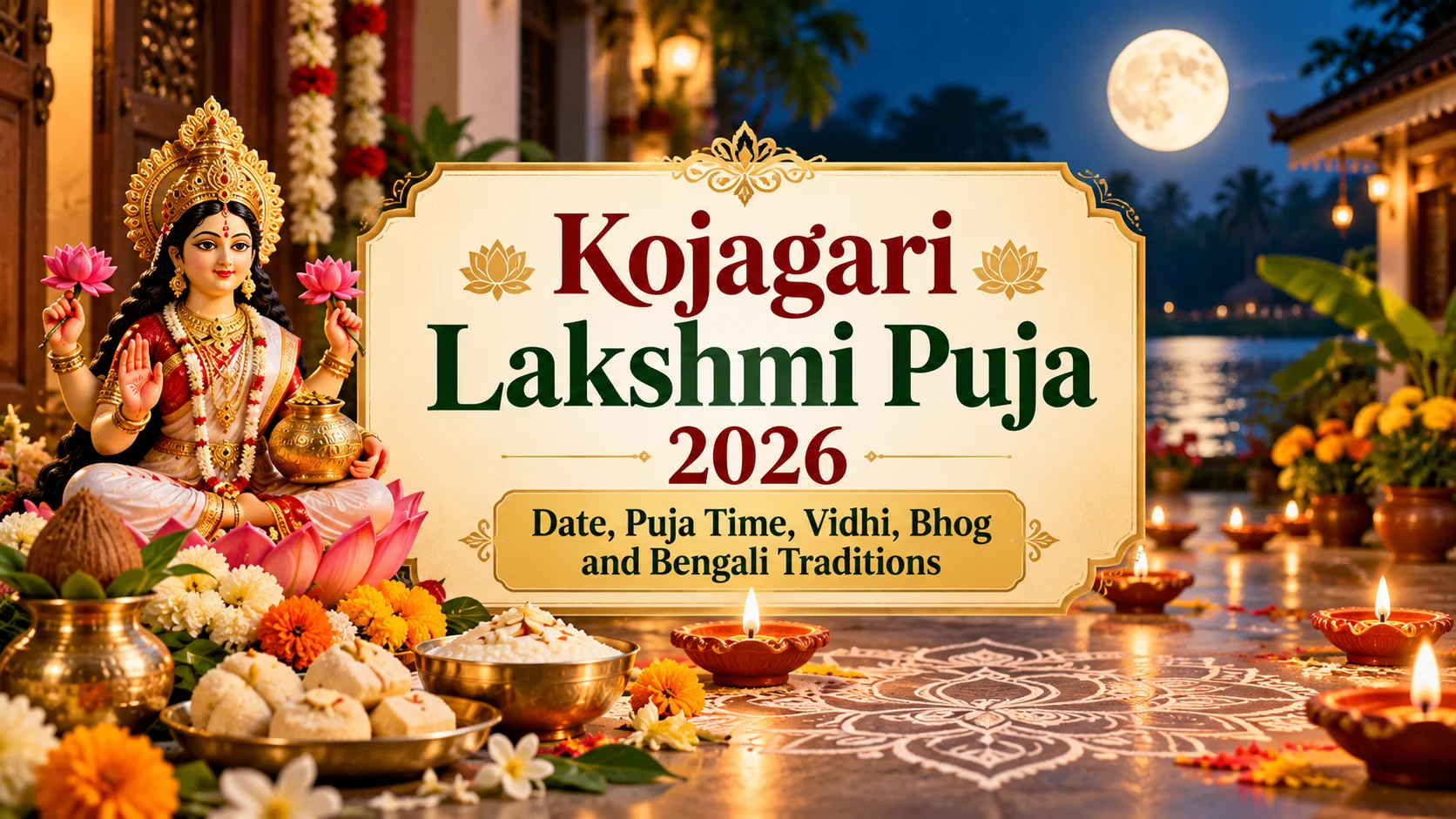
In West Bengal, Kojagari Lakshmi Puja in 2026 falls on Sunday, 25 October. Commonly called Lokkhi Pujo in Bengali, it is traditionally observed at home, where families arrange the puja space, prepare offerings and read or listen to the Lakshmi Panchali according to their customs.
Here is a practical guide to the date, significance, rituals, traditional food offerings and regional customs associated with the festival.
When Is Lakshmi Puja in 2026?
Kojagari Lakshmi Puja will be observed on Sunday, 25 October 2026, in West Bengal. The occasion is associated with Sharad Purnima, the autumn full-moon observance.
- Festival: Kojagari Lakshmi Puja
- Date: Sunday, 25 October 2026
- Region: West Bengal, with observances in other parts of India as well
- Traditional focus: Worship of Goddess Lakshmi, prayers for prosperity and a night-time observance in many households
According to the India Meteorological Department's Kolkata regional festival calendar, Kojagari Lakshmi Puja falls on 25 October in 2026.
What about the puja timing? For Kolkata, Drik Panchang lists the full-moon tithi as beginning at approximately 11:55 am on 25 October and ending at approximately 9:41 am on 26 October. Its listed Nishita puja window is 10:56 pm to 11:46 pm on 25 October. These are location-specific panchang calculations, not a universal time for every city or household. Families should consult their local Bengali panjika or priest for the observance they follow.
Reference: Kojagari Puja date and timings for Kolkata.
What Is Kojagari Lakshmi Puja?
Kojagari Lakshmi Puja is a Hindu observance dedicated to Goddess Lakshmi, who is widely associated with wealth, prosperity, good fortune and abundance. In Bengal, the occasion is especially significant because many families observe this puja as a major annual worship of the goddess in their homes.
The name Kojagari is commonly connected with the Sanskrit expression “Ko jagarti?”, meaning “Who is awake?” According to a traditional religious belief, Goddess Lakshmi visits the world during the auspicious full-moon night and blesses devotees. This belief is associated with the custom of staying awake for part of the night, although practices differ between households and communities.
For many families, the festival is not simply about material prosperity. It is also a time to pray for peace at home, responsible use of resources, family well-being and a life guided by honesty and gratitude.
Why Is Lakshmi Puja Important in Bengal?
In Bengal, Kojagari Lakshmi Puja follows the large public celebrations of Durga Puja. While Durga Puja is widely associated with community pandals, cultural programmes and public gatherings, Lakshmi Puja is often observed in a more intimate setting within the household.
Families may clean their homes, decorate entrances with alpana, prepare traditional food and gather for prayers. The goddess may be worshipped using an image, an idol, a painted Lakshmi sara or another form followed by the family. Customs vary by region, family tradition and the guidance of the household priest.
The observance also reflects a long-standing cultural connection between prosperity, food, agricultural abundance and the well-being of the household. In this sense, the puja is both a religious occasion and an expression of Bengali domestic culture.
Kojagari Lakshmi Puja Vidhi: Common Preparations and Rituals
There is no single procedure followed by every Bengali family. The steps below describe common household practices, not a compulsory ritual sequence. Anyone following a specific family tradition or priest's instructions should use that guidance.
1. Clean and prepare the puja space
Families generally clean the home and prepare a dedicated space for worship. A clean cloth or asana may be arranged for the deity, along with flowers, a lamp, incense and the items required for the family's customary puja.
2. Draw alpana at the entrance
Traditional Bengali alpana designs are often created using rice paste. Some households draw small footprints associated with the arrival of Goddess Lakshmi, leading from the entrance towards the puja area. The designs and placement differ between families.
3. Arrange the deity and offerings
The family places the Lakshmi image, idol or other traditional representation in the prepared space. Flowers, fruit, sweets, water and other offerings may be arranged according to the family's customs. Some households also use a ghot, or ritual pot, as part of their worship.
4. Perform the puja and offer prayers
Devotees offer flowers and prayers, light a lamp and follow their customary worship procedure. Some families conduct the puja with a priest, while others perform it at home using a family prayer book or established tradition.
5. Read or listen to the Lakshmi Panchali
Reading or listening to the Lakshmi Panchali is a familiar part of the observance in many Bengali households. The devotional narrative is traditionally associated with prayers for the family's welfare and prosperity.
6. Offer bhog and perform aarti
Food offerings are presented according to family tradition. Aarti and concluding prayers may follow, after which the offerings are shared as prasad where customary.
7. Observe the night according to family custom
Some devotees remain awake for part of the night in keeping with the Kojagari tradition. Others complete their worship and rest according to their household practice. Staying awake all night is not a requirement that should be assumed for every devotee.
What Is Offered as Bhog During Lakshmi Puja?
Food offerings are an important part of the festival, and the menu differs across Bengali households. The emphasis is generally on preparing offerings with care and presenting them respectfully.
Commonly associated foods may include:
- Fruits: Seasonal fruit arranged as an offering.
- Sweets: Sandesh, rosogolla, narkel naru or other sweets, depending on local and family customs.
- Khichuri: Some households prepare khichuri as part of the day's food offerings or meal traditions.
- Narkel naru: Coconut-based sweets that are familiar in Bengali festive cooking.
- Milk-based preparations: Some families prepare payesh or other traditional milk-based dishes.
- Other homemade dishes: The selection varies with family practice, regional customs and dietary requirements.
Not every household offers every dish. Families should follow their own religious customs and avoid treating a particular menu as mandatory for everyone.
Why Is the Full Moon Important?
Kojagari Lakshmi Puja is closely linked with Sharad Purnima, the full moon of the autumn season. The moonlit night gives the festival its distinctive atmosphere and is connected with traditional beliefs about the goddess's visit and blessings.
In some communities, milk or a milk-based preparation is placed under the moonlight as part of local custom. Such practices vary, and their religious or cultural meaning should be understood within the tradition in which they are observed.
For many families, the full moon is also a reason to gather, pray and spend time together after the busy Durga Puja period.
Kojagari Lakshmi Puja vs Diwali Lakshmi Puja: What Is the Difference?
Although both observances honour Goddess Lakshmi, Kojagari Lakshmi Puja and Diwali Lakshmi Puja are not the same festival date.
- Kojagari Lakshmi Puja: Associated with Sharad Purnima and especially prominent in Bengal. In 2026, it falls on 25 October.
- Diwali Lakshmi Puja: Observed during the Diwali period, generally on the Amavasya night according to the relevant regional calendar. In 2026, the listed date is 8 November.
In Bengal, Kojagari Lakshmi Puja is a major household observance in its own right. During the Diwali period, Kali Puja is also especially prominent in the region. Across India, local customs and the preferred festival calendar may differ.
For the national Diwali festival background, readers can consult the Government of India's Utsav portal's Diwali guide. For local puja dates and timings, use a reliable city-specific panchang.
How Families Can Prepare for Lakshmi Puja
Preparing for the festival does not need to be complicated. A little planning can help families observe the day meaningfully without unnecessary expense or last-minute pressure.
- Clean and organise the puja area in advance.
- Prepare flowers, lamps, incense and other customary worship items.
- Decide on the bhog menu and purchase fresh ingredients.
- Prepare alpana designs or other traditional decorations if desired.
- Check the local panjika for the timing followed by the family.
- Keep the puja area safe, particularly when using open flames or oil lamps.
- Include children and older family members in ways that are comfortable for them.
- Choose simple, meaningful celebrations that suit the household's budget and customs.
The Meaning of Prosperity Beyond Wealth
Goddess Lakshmi is widely associated with material abundance, but the festival can also prompt reflection on what prosperity means in everyday life. A peaceful household, good health, food security, generosity, education and the ability to support loved ones are also important parts of a fulfilling life.
For many devotees, the prayers of Lakshmi Puja are an expression of hope and gratitude. The occasion offers an opportunity to review family priorities, practise generosity and begin a new season with a positive outlook.
The festival's enduring appeal lies in this combination of faith, food, art, family traditions and the wish for a more secure and harmonious future.
Kojagari Lakshmi Puja remains a cherished part of Bengal's autumn festival calendar. In 2026, the observance falls on Sunday, 25 October, bringing families together for prayers, traditional offerings, alpana and the customs associated with the full-moon night.
Whether the celebration is elaborate or simple, the heart of the occasion lies in devotion, gratitude and the hope for prosperity and well-being. By understanding the festival's traditions and checking local timings, families can prepare to observe the day in a way that is meaningful to them.
PulseNex Updates will continue to bring readers useful guides to festivals, dates, traditions and cultural observances across India.