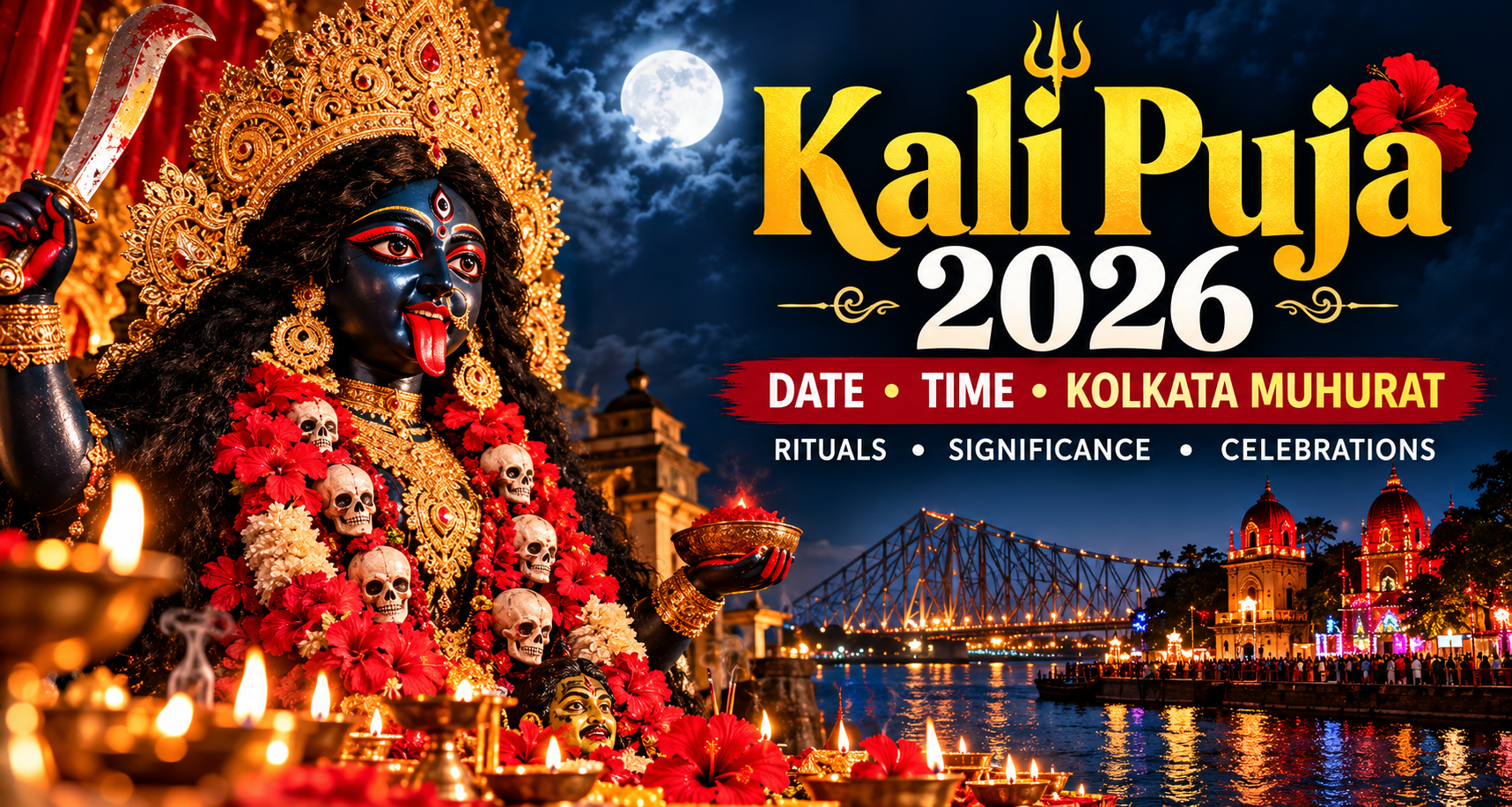
Kali Puja 2026 will be celebrated on Sunday, November 8, 2026, when devotees across Kolkata and other parts of West Bengal prepare to worship Goddess Kali on the night of Kartik Amavasya. Also known as Shyama Puja, the festival is one of Bengal's important religious observances and coincides with Diwali in 2026.
For devotees planning their worship, the date and the midnight puja period are particularly important. However, the exact muhurat depends on the city and the panchang calculation being followed. This guide explains the date, Kolkata's published puja timings, the significance of Kali Puja, traditional rituals, Bhoot Chaturdashi customs and ways to celebrate responsibly.
Kali Puja 2026: Date and Day
Kali Puja falls on Sunday, November 8, 2026. The festival is associated with Kartik Amavasya, the new moon lunar day, and is dedicated to Goddess Kali.
In Bengal, devotees commonly refer to the celebration as Shyama Puja. Worship takes place in homes, neighbourhood pandals and temples. Many community celebrations feature elaborately decorated idols, devotional music, flower offerings and rituals conducted by priests.
The date is confirmed by the West Bengal government's SAHAJ Puja Permission Portal and by Drik Panchang's Kolkata calendar.
Kali Puja 2026: Timings in Kolkata
According to Drik Panchang's Kolkata-specific calendar, the following timings apply to Kali Puja 2026.
| Observance | Date and time |
|---|---|
| Kali Puja | Sunday, November 8, 2026 |
| Amavasya Tithi begins | 11:27 AM, November 8 |
| Amavasya Tithi ends | 12:31 PM, November 9 |
| Kolkata Nishita Puja Muhurat | 10:55 PM–11:46 PM, November 8 |
Important: These are published panchang timings, not a universal schedule for every temple or household. Local priests and puja committees may follow a specific almanac. Confirm the final worship time with the organiser or priest responsible for your puja.
Why Is Kali Puja Celebrated at Midnight?
Kali Puja is traditionally associated with Nishita Kaal, the midnight period. The observance is determined using the lunar calendar and the timing of Amavasya rather than simply the civil date on the clock.
This is one reason Kali Puja and Lakshmi Puja can have different ritual timings even when they fall on the same calendar date. Kali Puja centres on worship during the prescribed midnight period, while Diwali Lakshmi Puja is commonly associated with the evening Pradosh period.
In 2026, the relevant Amavasya period includes the night of November 8. Drik Panchang lists Kolkata's Nishita Muhurat as 10:55 PM to 11:46 PM that night. A different city can have a different Nishita window because local sunset and sunrise affect the calculation.
What Is Kali Puja? Understanding Its Significance
Kali Puja is a Hindu festival dedicated to Goddess Kali, a powerful form of the Divine Mother associated in Hindu traditions with the destruction of evil, protection and the triumph of divine power.
For many devotees, the festival is an occasion to seek the goddess's blessings for courage, spiritual strength, protection and well-being. Worship traditions differ among families, temples and regional communities, so there is no single ritual sequence followed by every devotee.
In West Bengal, Kali Puja has a distinctive cultural presence. Homes and community spaces may be decorated with lamps and lights, while neighbourhood committees arrange idols and ritual ceremonies. In some areas, celebrations continue through the night.
Kali Puja and Diwali 2026: What Is the Difference?
Kali Puja and Diwali are closely connected through the Amavasya festival period, but their central forms of worship can differ by region.
- Kali Puja: Devotees worship Goddess Kali, particularly in West Bengal and other regions with established Shyama Puja traditions.
- Diwali Lakshmi Puja: Many communities worship Goddess Lakshmi for prosperity, well-being and good fortune.
- Timing: Kali Puja is traditionally associated with Nishita Kaal, while Lakshmi Puja is commonly performed during the evening Pradosh period.
- Local customs: Rituals, foods, decorations and the sequence of observances vary by region and family tradition.
These are broad regional distinctions, not strict rules for every household. Many families observe several Diwali-period customs together.
Traditional Kali Puja Rituals
The precise procedure for Kali Puja depends on the tradition followed by the household, temple or community committee. Common elements may include the following.
1. Cleaning and decorating the worship space
Families and puja organisers prepare the worship area, arrange the idol or image of Goddess Kali, and decorate the space with flowers, lamps and other traditional items.
2. Sankalpa and preparation for worship
Where prescribed by the family or priest, the worship begins with a sankalpa, or statement of devotional intention. The priest then follows the ritual sequence appropriate to the tradition.
3. Offerings to Goddess Kali
Offerings can include flowers, fruits, sweets, incense and other items prescribed by the family's custom. The exact list should be confirmed with the priest conducting the puja, especially where a particular ritual tradition is followed.
4. Mantra, prayer and devotional worship
Devotees may listen to or recite prayers and mantras, participate in the puja and seek blessings. Community pandals may also arrange devotional music and other cultural activities.
5. Prasad and distribution
After the worship, prasad may be distributed among family members and devotees according to the local custom. Food offerings and preparation methods vary among households and temples.
These are general descriptions, not a complete ritual manual. Follow the guidance of your family priest or the temple's authorised organisers for the prescribed puja procedure.
Bhoot Chaturdashi 2026: The Night Before Kali Puja
Bhoot Chaturdashi is an important observance associated with the Kali Puja period in Bengal. It is commonly marked on the day before Kali Puja, although exact ritual timing follows the relevant lunar calendar.
One well-known Bengali custom involves lighting fourteen lamps, traditionally associated with remembering ancestors and protecting the household from negative influences in folk belief. Families may also prepare a dish featuring fourteen kinds of leafy greens, known as choddoshak, although practices vary.
These traditions are part of Bengal's cultural and religious heritage. The specific customs followed by a household depend on family practice and local tradition.
Where to Experience Kali Puja in Kolkata
Kolkata offers several ways to experience Kali Puja, from traditional temple worship to community pandals. Visitors should check current opening arrangements, crowd guidance and any special notices before travelling.
Kalighat Kali Temple
Kalighat Kali Temple is one of Kolkata's best-known places of worship dedicated to Goddess Kali. Devotees visit throughout the year, and festival periods can attract significant crowds. Check the temple's current notices for worship arrangements and visitor guidance.
Dakshineswar Kali Temple
Dakshineswar Kali Temple, on the eastern bank of the Hooghly River, is another major destination associated with Goddess Kali. If planning a visit on Kali Puja, verify the latest opening hours, ritual schedule and crowd-management instructions directly with the temple.
Community Kali Puja pandals
Local clubs and community committees organise Kali Puja celebrations across Kolkata and its suburbs. Decorations, idols and cultural programmes vary from one neighbourhood to another. There is no single permanent list of all 2026 pandals, so check local announcements for confirmed locations and programme details.
How to Plan a Kali Puja Visit in Kolkata
- Plan transport: Check the latest Metro Railway Kolkata and local transport notices before travelling late at night.
- Expect crowds: Popular temples and prominent pandals may be busy. Follow police and organiser instructions.
- Check opening arrangements: Do not assume that a temple will maintain its regular visiting hours on festival night.
- Keep children and older family members in mind: Agree on a meeting point and avoid congested areas where possible.
- Celebrate responsibly: Follow current local rules on fireworks, noise, waste disposal and public safety.
- Respect worshippers: Ask permission before photographing people or restricted ritual areas.
Festival-night transport schedules, firecracker rules and specific pandal programmes can change from year to year. Verify official announcements closer to November 8, 2026.
Is Kali Puja a Public Holiday in West Bengal in 2026?
Kali Puja falls on Sunday, November 8, 2026. The West Bengal government's published holiday information identifies Kali Puja on that date as a Sunday public holiday under the applicable holiday classification. The applicable holiday arrangements for offices, banks and other institutions may differ, so employees and visitors should check the relevant official notice.
For government holiday information, consult the West Bengal government website and the relevant department's current circulars.
How to Celebrate Kali Puja Safely
Traditional worship and public celebrations can be enjoyed while taking basic safety precautions.
- Use lamps and candles on stable surfaces, away from curtains and other flammable materials.
- Never leave an open flame unattended.
- Follow the latest rules on authorised fireworks and designated timings; do not rely on previous years' rules.
- Keep children away from fireworks and crowded electrical installations.
- Use designated waste bins and help keep neighbourhoods and temple surroundings clean.
- Follow police, fire service and puja committee instructions during public events.
Conclusion
Kali Puja 2026 will be celebrated on Sunday, November 8, with devotees worshipping Goddess Kali during the Kartik Amavasya period. For Kolkata, Drik Panchang lists the Nishita Puja Muhurat as 10:55 PM to 11:46 PM, while the Amavasya Tithi continues until 12:31 PM on November 9.
Whether you plan to perform puja at home, visit a temple or explore community celebrations, confirm the ritual timings and local arrangements before the festival. Kali Puja remains an important expression of devotion and Bengali cultural identity.