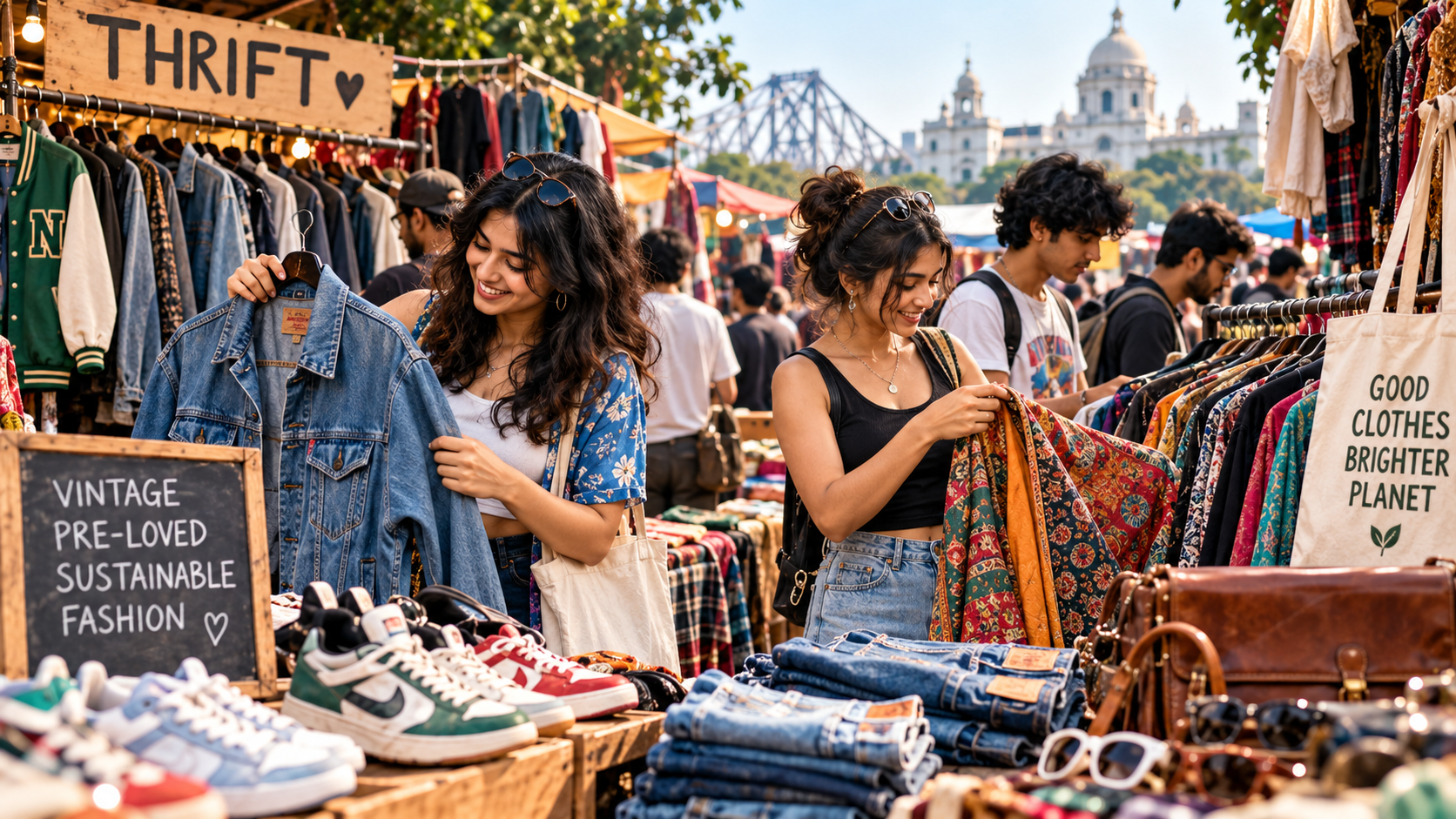
Thrifting in India is no longer a niche shopping habit. Searches for second-hand fashion, vintage clothing and thrift stores have reached an all-time high, according to Google India.
Searches for “how to thrift” have increased by 850%, while “thrift store near me” has risen by 600%. Searches for “what is thrift store” have increased by 1,000%, showing that many Indians are discovering the concept for the first time.
The trend is spreading across major Indian cities, including Bengaluru, Delhi, Mumbai, Hyderabad, Chennai, Kolkata, Kochi, Dehradun, Guwahati and Jaipur.
So what exactly is thrifting, where can you find good second-hand clothes in India, how much should you pay, how can you avoid scams and what should a beginner look for?
Here is the complete 2026 guide to thrifting in India.
What Is Thrifting?
Thrifting is the practice of buying pre-owned, second-hand or previously used products instead of buying them new.
Although the term is strongly associated with clothing, thrifting can include:
- Clothes
- Jackets
- Jeans
- Shoes
- Bags
- Vintage accessories
- Furniture
- Home decor
- Books and collectibles
The idea is simple: instead of throwing away something that is still usable, another person gives it a second life.
Why Is Thrifting Suddenly Trending in India?
Several factors are driving the growth of thrifting in India.
1. Lower Prices
One of the biggest attractions is price.
A good second-hand garment can cost significantly less than a comparable new item, although the actual price depends on the brand, condition, rarity and seller.
2. Unique Fashion
Thrift shopping gives consumers access to styles that may not be available in ordinary retail stores.
Vintage jackets, old sports jerseys, oversized shirts, Y2K pieces and unusual accessories can make a wardrobe look very different from mainstream fast-fashion collections.
3. Sustainability
Buying pre-owned products keeps usable items in circulation instead of sending them directly into the waste stream.
Google reports that searches for “circular fashion” increased by 2,500% in India over the past year, while searches related to sustainable fashion increased by 120%.
4. Gen Z and Social Media
Instagram, YouTube, Pinterest and other social platforms have helped turn second-hand clothing into a fashion trend rather than simply a way to save money.
Y2K outfits, vintage sportswear, oversized denim and retro accessories are particularly suited to social-media-driven fashion.
Thrifting Search Trends in India
The latest Google data shows how rapidly interest is growing.
| Search | Change / Trend |
|---|---|
| Thrifting | All-time high |
| How to thrift | +850% |
| Thrift store near me | +600% |
| What is thrift store | +1,000% |
| Circular fashion | +2,500% |
| Sustainable fashion | +120% |
These figures come from Google India's analysis of Search trends and show that thrifting is not simply a social-media buzzword. People are actively searching for information and places to shop.
What Are People Buying From Thrift Stores?
According to Google's India search data, jackets were the most-searched thrift item, followed by tops, shoes, jeans and furniture.
Other categories gaining attention include:
- Vintage jerseys
- Vintage sarees
- Vintage T-shirts
- Vintage jackets
- Vintage bags
- Y2K clothing
- Jorts
- Track pants
- Baggy jeans
What Is Y2K Fashion?
Y2K fashion refers broadly to styles associated with the late 1990s and early 2000s.
Popular examples include:
- Baggy jeans
- Low-rise styles
- Oversized T-shirts
- Track jackets
- Retro sportswear
- Colourful accessories
- Chunky sneakers
- Vintage-inspired bags
The renewed interest in Y2K fashion has helped increase demand for second-hand clothing because older pieces can provide a more authentic retro look.
How to Start Thrifting in India
If you are completely new to thrift shopping, do not start by buying the first cheap item you find.
Use a simple process.
Step 1: Decide What You Want
Choose a category before you start shopping.
For example:
- Vintage jacket
- Baggy jeans
- Football jersey
- Vintage saree
- Leather bag
Step 2: Set a Budget
Decide your maximum spending limit before browsing.
Thrifting can save money, but buying multiple inexpensive items you do not need can still become expensive.
Step 3: Check Measurements
This is especially important when shopping online.
Do not rely only on S, M, L or XL labels because sizing can differ between brands, countries and older garments.
Step 4: Inspect Condition
Look for:
- Stains
- Holes
- Loose stitching
- Broken zippers
- Fabric damage
- Fading
- Odour
Step 5: Compare the Total Cost
A ₹400 item is not necessarily a ₹400 purchase.
For online shopping, consider shipping charges, platform fees and any other applicable costs before deciding whether the deal is worthwhile.
How to Find a Thrift Store Near You
One of the fastest-growing searches in India is “thrift store near me.” Google says this search increased by 600%.
You can search Google Maps using combinations such as:
- thrift store near me
- second hand clothes near me
- vintage clothing near me
- used clothes market near me
- vintage market near me
Check recent reviews, photographs and opening hours before travelling.
Best Cities in India for Thrifting
Google's latest search analysis identifies several Indian cities where interest in thrift shopping is particularly strong.
Bengaluru
Bengaluru has a large young population and an active fashion and startup culture, making it one of India's major thrift-shopping markets.
Delhi
Delhi has long been known for budget shopping and markets, and its huge consumer base makes it an important destination for second-hand and vintage fashion.
Mumbai
Mumbai combines street fashion, vintage shopping and a large online thrift community.
Kolkata
Kolkata has a long tradition of budget markets and second-hand shopping. Google lists Kolkata among the cities showing strong interest in thrift searches.
Hyderabad
Hyderabad is also among the major Indian cities showing significant interest in thrift shopping.
Chennai
Chennai is another major city included in Google's list of top thrift-search locations.
Online Thrift Shopping in India
You do not necessarily need to visit a physical market to thrift.
Online thrift shopping has expanded through dedicated websites, marketplaces and social-media sellers.
However, online buying requires more research because you cannot physically inspect the product before paying.
How to Check Whether an Online Thrift Store Is Genuine
This is one of the most important parts of thrift shopping.
Check the Seller
Look for a clear seller identity, website information, customer reviews and contact details.
Look for Real Product Photos
Be cautious when every product uses identical professional catalogue photographs.
For second-hand goods, genuine photographs of the actual item are generally more useful.
Read the Return Policy
Understand whether the seller accepts returns, exchanges or refunds before purchasing.
Check Measurements
Ask for actual garment measurements when they are not already provided.
Do Not Pay Blindly
Be cautious of sellers who demand payment through unusual methods or pressure you to pay immediately.
How to Avoid Thrift Shopping Scams
The growth of online thrift shopping also creates opportunities for fraudulent sellers.
Watch for these warning signs:
- Prices that appear unrealistically low
- No real product photographs
- No seller information
- Comments disabled on social media
- Pressure to make immediate payment
- No refund or return information
- Only private-message communication
- Requests for sensitive banking information
Never share your OTP, UPI PIN, card PIN or banking password with a seller.
Thrifting vs Buying New Clothes
| Factor | Thrifting | Buying New |
|---|---|---|
| Price | Often lower | Usually retail price |
| Uniqueness | Often high | Depends on collection |
| Condition | Varies | New |
| Sizing | Can be inconsistent | More predictable |
| Availability | One-off pieces are common | Usually repeatable |
| Environmental angle | Extends product life | Requires new production |
Is Thrifting Actually Cheaper?
It can be, but not every thrift item is automatically a bargain.
Vintage, rare or highly desirable pieces can sometimes cost more than ordinary new clothing because scarcity increases their value.
Before buying, compare:
- Original retail price
- Current resale price
- Condition
- Brand
- Rarity
- Shipping cost
- Alteration or cleaning cost
Is Vintage the Same as Second-Hand?
No.
“Second-hand” simply means an item has previously been owned or used.
“Vintage” generally refers to an older item with characteristics associated with a particular era.
A second-hand T-shirt from last year is not necessarily vintage.
Similarly, a new garment designed with a retro appearance is not automatically a vintage garment.
How Google AI Can Help You Thrift
AI-powered tools are becoming part of the thrift-shopping experience.
Google says its AI tools can help consumers plan shopping trips, understand products and find similar styles.
Google Lens
You can photograph a vintage item and use visual search to investigate similar products or styling ideas.
Circle to Search
If you see an interesting retro outfit online, visual search can help identify similar items.
Gemini
AI assistants can help generate outfit combinations and styling ideas based on a particular item.
Virtual Try-On
Google has also highlighted AI-powered virtual try-on experiences that can help shoppers visualize clothing.
Is Thrifting Good for the Environment?
One of the strongest arguments for second-hand shopping is extending the useful life of products.
When an existing garment is purchased and worn again, it remains in circulation instead of immediately becoming waste.
However, sustainability is not simply about buying as many second-hand products as possible.
The most sustainable purchase is often the item you actually need and will use repeatedly.
How to Build a Thrifted Wardrobe
You do not need to replace your entire wardrobe.
Start with versatile pieces.
- Denim jacket
- Oversized shirt
- Classic jeans
- Neutral trousers
- Vintage sports jersey
- Leather or canvas bag
- Classic saree
Choose pieces that can work with clothing you already own.
What Should Beginners Avoid Buying?
Some categories require more inspection than others.
Beginners should be particularly careful with:
- Damaged shoes
- Heavily stained clothing
- Items with strong odours
- Unverified luxury products
- Products with unclear authenticity
- Items requiring expensive repairs
How Much Should You Spend on Thrift Shopping?
There is no universal thrift-shopping budget.
A better approach is to decide how much you are comfortable spending per month and then prioritize quality over quantity.
Buying one ₹1,000 jacket that you wear 50 times can be a better purchase than buying five ₹200 pieces that remain unused.
Is Thrifting Worth It in India in 2026?
For many shoppers, yes.
The combination of affordability, uniqueness, vintage fashion and growing environmental awareness is pushing thrifting into the mainstream.
But good thrifting requires patience.
The best find is not necessarily the cheapest item. It is the item that fits you, suits your style, is in good condition and will actually be used.
The Future of Thrifting in India
The latest search data suggests that India's second-hand fashion market is entering a new phase.
What was once associated primarily with bargain hunting is increasingly being connected with fashion, sustainability and personal identity.
Searches for circular fashion rising by 2,500% are particularly significant because they show that the conversation is moving beyond simply finding cheap clothes.
At the same time, online thrift stores and creator-led resale platforms are making it easier for people to buy and sell pre-owned products across cities.
Bottom Line
Thrifting in India has moved from a niche habit to a rapidly growing search and shopping trend.
Google's latest data shows that interest has reached an all-time high, with major growth in searches for how to thrift, nearby thrift stores, second-hand shopping and circular fashion.
For beginners, the best strategy is simple: know what you want, check the condition, compare the total price, verify the seller and buy only what you will actually wear or use.
The next generation of Indian shoppers may not see second-hand as “used.” They may simply see it as another way to shop.