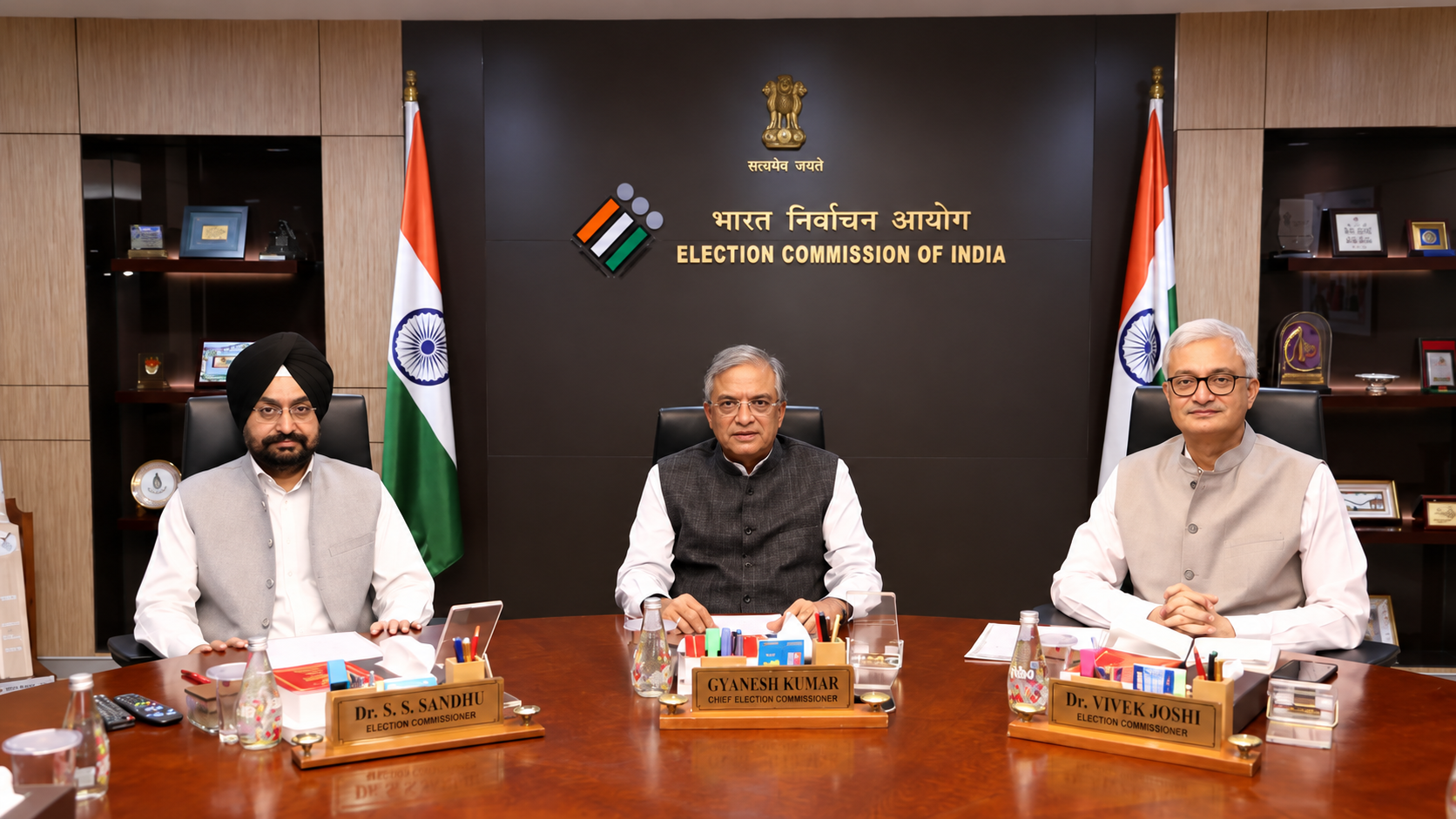
The Election Commission of India (ECI) has directed 20 states and Union Territories where the Special Intensive Revision (SIR) of electoral rolls has been completed to conduct a special drive for voters who may have been left out of the electoral rolls.
The exercise will also focus on young and first-time eligible voters. According to the Election Commission's instructions, the enrolment process in these states and UTs will be carried out through the continuous updation mechanism using Form 6.
Why has the Election Commission ordered the special voter drive?
The directive comes after the SIR exercise resulted in more than 13 crore names being removed from draft electoral rolls across 30 states and Union Territories. The figure has attracted considerable public and political scrutiny.
However, the 13-crore figure needs to be understood correctly. It refers to names not included in the draft rolls after the revision process and includes categories such as voters identified as absent, shifted, deceased or duplicate. The figure does not mean that 13 crore eligible voters were confirmed to have been wrongly deleted.
The Election Commission has now asked election officials in states and UTs where SIR has concluded to identify eligible people who may have been left out and facilitate their enrolment.
How will voters left out after SIR be re-enrolled?
Eligible voters will be able to apply for inclusion through Form 6 under the continuous updation process.
The Election Commission's voter services portal currently provides Form 6 for new voter registration and related electoral-roll services. The ECI also provides facilities for checking electoral-roll information and accessing SIR-related voter services.
The special drive is therefore not limited to people who are registering for the first time. It is also intended to provide a route for eligible voters who were left out during the revision process to seek inclusion.
What will election officials do?
According to the reported instructions issued to state Chief Electoral Officers, officials have been asked to compare the electoral rolls before and after SIR and identify voters who may have been left out.
The process can involve Chief Electoral Officers, District Election Officers, Electoral Registration Officers and Booth Level Officers.
Field-level officials may visit households in cases where an eligible voter appears to have been left out and is not otherwise identified as a duplicate, deceased or shifted elector. Political parties and their booth-level representatives have also been asked to assist the authorities in identifying people who may require enrolment.
What is changing about Form 6?
A key issue concerns the declaration associated with Form 6 during the SIR exercise.
During the SIR process, an additional declaration had been introduced asking applicants about their or their parents' presence on an earlier electoral roll. The reported September 29 ECI instruction states that this SIR-specific declaration will be used during the SIR phase only.
Outside the SIR phase, the regular statutory forms under the Registration of Electors Rules, 1960 will be used.
This distinction is significant because the special drive in states and UTs where SIR has already been completed is being conducted through the normal continuous updation process.
What does continuous updation of electoral rolls mean?
Electoral rolls are not permanently frozen after the publication of a final roll. The Election Commission provides a continuous updation mechanism through which eligible citizens can seek enrolment and voters can apply for changes to their electoral-roll information.
The ECI states that a person seeking enrolment can submit a claim through Form 6 and that electoral rolls can continue to be updated after final publication, subject to the applicable legal and electoral procedures.
What is the situation in Maharashtra?
Maharashtra is among the states where the SIR process is still underway. Following the Election Commission's recent directions, officials have been instructed not to exclude eligible voters without giving them an adequate opportunity to submit documents and respond to the concerns raised against their entries.
According to reporting on the instructions issued by the Maharashtra Chief Electoral Officer's office, Booth Level Officers will collect documents from voters in certain cases and upload them for consideration by the Electoral Registration Officer.
The Maharashtra draft roll had flagged around 1.22 crore records for verification, including cases involving discrepancies in relatives' details and cases where voters could not be mapped to a relative in the previous roll.
Special enrolment camps in Maharashtra have also been scheduled for October 3, 4, 10 and 11 as part of the voter-registration and verification process.
What happened in the Goa voter-roll case?
The issue of voters being left out has also been highlighted by a case in Goa involving 97 voters.
According to reporting by The Indian Express, the 97 voters had been removed at the draft stage, subsequently produced documents and were found eligible by Electoral Registration Officers. However, officials reported that the electoral-roll software did not provide an option to reverse the deletion, and the final roll was published without their names.
The case became part of the broader discussion about the functioning and access controls of ECINet, the software platform used for electoral-roll management.
ECINet review and electoral-roll management
The Election Commission's September decisions also included a proposal for an independent expert review of ECINet. The Commission said an expert from an IIT or IIIT would be involved in reviewing the system.
The broader issue concerns how electoral-roll information is managed digitally while statutory responsibilities remain with election officials at different administrative levels.
The Election Commission has also indicated that necessary software changes would be made to provide officials with operational flexibility during the revision process.
How can voters check their electoral-roll status?
Voters can use the Election Commission's official voter services portal to search electoral-roll information and access SIR-related services.
The ECI portal provides a specific facility for searching a person's name in the last SIR electoral roll. Searches can be made using information such as the state, district, Assembly Constituency, polling station, part serial number and elector details.
For eligible citizens who need to apply for new enrolment, the ECI portal provides Form 6. Applicants should use the official Election Commission platform or the relevant state Chief Electoral Officer website rather than relying on unofficial registration websites.
What should a voter do if their name is missing?
- Check the latest electoral roll through the official Election Commission or state CEO website.
- Use the ECI's SIR search facility to check the person's details in the relevant previous roll where applicable.
- If eligible for enrolment and the name is not present, use the applicable Form 6 process.
- Keep the required supporting documents ready according to the instructions applicable in the relevant state or UT.
- Track the application through the official voter-services system.
- If an application is rejected, voters can use the applicable appeal mechanism provided under electoral law.
The ECI's published guidance states that appeals against certain Electoral Registration Officer decisions during continuous updation can be made to the designated appellate authority, with a further appeal to the Chief Electoral Officer as provided under the applicable procedure.
What happens next?
The special drive is expected to focus on identifying eligible electors who were not included in the revised rolls and assisting them with the applicable enrolment process.
The effectiveness of the exercise will depend on how state and district election officials identify potentially left-out voters, process Form 6 applications and update the electoral rolls.
For voters, the immediate step is to verify their current electoral-roll status and use the official ECI or state election machinery if their name is missing and they remain eligible for registration.