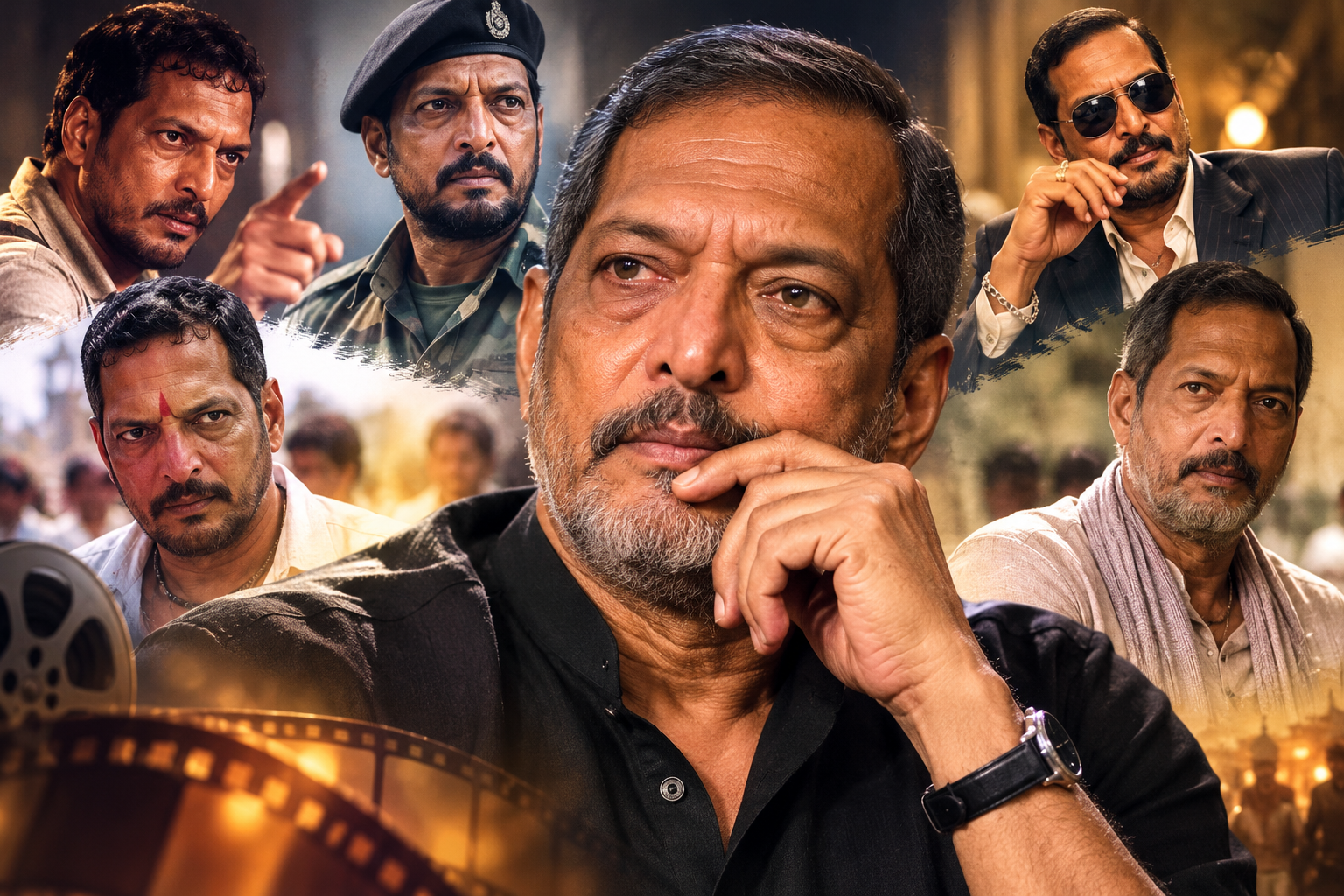
Veteran Indian actor Nana Patekar has died at the age of 75 after suffering a cardiac arrest at his residence in Dona Paula, Goa, on October 8, 2026. He was taken to Manipal Hospital, where doctors attempted to revive him with CPR for around 45 minutes. He could not be revived.
Nana Patekar Dies at 75
Nana Patekar, one of India's most distinctive actors, died on Thursday morning after being found unconscious at his home in Goa. Reports citing his son Malhar and hospital sources confirmed his death.
According to reports, doctors at Manipal Hospital attempted continuous CPR for approximately 45 minutes. He was declared dead at around 5:20 am.
Who Was Nana Patekar?
Born Vishwanath Patekar in Maharashtra in 1951, Nana Patekar built a career spanning theatre, Hindi cinema and Marathi cinema. He became known for his powerful dialogue delivery, intense screen presence and ability to portray complex characters.
Before becoming a familiar face in Indian cinema, Patekar spent years working in theatre. His stage experience helped shape the distinctive acting style that later became one of his trademarks.
Nana Patekar's Film Career
Patekar made his film debut with Gaman in 1978. He initially appeared in smaller roles before gaining wider recognition through films such as Parinda.
His performance as the gangster Anna in Parinda became one of the major turning points in his career. He subsequently delivered acclaimed performances in films including Prahaar: The Final Attack, Angaar, Tirangaa, Krantiveer and Agni Sakshi.
Nana Patekar and Krantiveer
One of Patekar's most celebrated performances came in Krantiveer, where he played Pratap Narayan Tilak. His performance earned him the National Film Award for Best Actor.
The role demonstrated his ability to combine emotional intensity with powerful dialogue delivery and remains one of the defining performances of his career.
Nana Patekar's National Film Awards
Patekar won three National Film Awards during his career. His performances in Parinda, Krantiveer and Agni Sakshi were recognised at the national level. He was also awarded the Padma Shri in 2013 for his contribution to the arts and cinema.
From Serious Cinema to Welcome
Although Patekar became famous for intense dramatic roles, he also demonstrated his versatility in mainstream commercial cinema.
His performance as Uday Shetty in the Welcome franchise introduced him to a new generation of audiences and showed his ability to handle comedy alongside his better-known dramatic performances.
Nana Patekar as a Director and Theatre Artist
Patekar was not limited to acting. He also directed Prahaar: The Final Attack, in which he played an Army officer.
Theatre remained an important part of his artistic identity. His work in Hindi and Marathi theatre helped establish the performance style that later became prominent in his films.
Nana Patekar's Social Work
Beyond cinema, Patekar was known for his involvement in social causes, particularly issues affecting farmers in Maharashtra.
In 2015, he and actor Makarand Anaspure established the Naam Foundation, which has worked on issues including farmer welfare and water conservation in Maharashtra.
Tributes Pour In
Tributes began emerging from across India's film industry and public life following news of Patekar's death. Prime Minister Narendra Modi described his performances as ones that would remain in the memory of generations and said his death had created a major loss for the artistic world.
Actor Akshay Kumar also remembered Patekar and highlighted his distinctive voice, intensity and authenticity as a performer.
Nana Patekar's Legacy
Nana Patekar leaves behind a career that crossed Hindi and Marathi cinema, theatre, directing and social work. From intense characters in films such as Parinda and Krantiveer to his memorable comic performance in Welcome, he demonstrated a range that made him one of India's most recognisable performers.
His death at 75 marks the end of a major chapter in Indian cinema. His performances, particularly his distinctive dialogue delivery and intense screen presence, are likely to remain an important part of his legacy.